Why You Need a Business Website: What It Should Actually Do for Your Business
A business website shouldn’t be something you build because you think you’re supposed to have one. It needs a job.
Maybe people already hear about you through referrals, Facebook, Pinterest, local events, Etsy, or your email list. That’s all fine. But once somebody wants to know more about what you do, where are you sending them?
That’s really why you need a business website. It gives all of your marketing somewhere useful to lead.
Where can someone see what you offer without messaging you first? Where do they find your best information, join your email list, look at your products, understand your services, or decide what to do next?
That’s the job of your website.
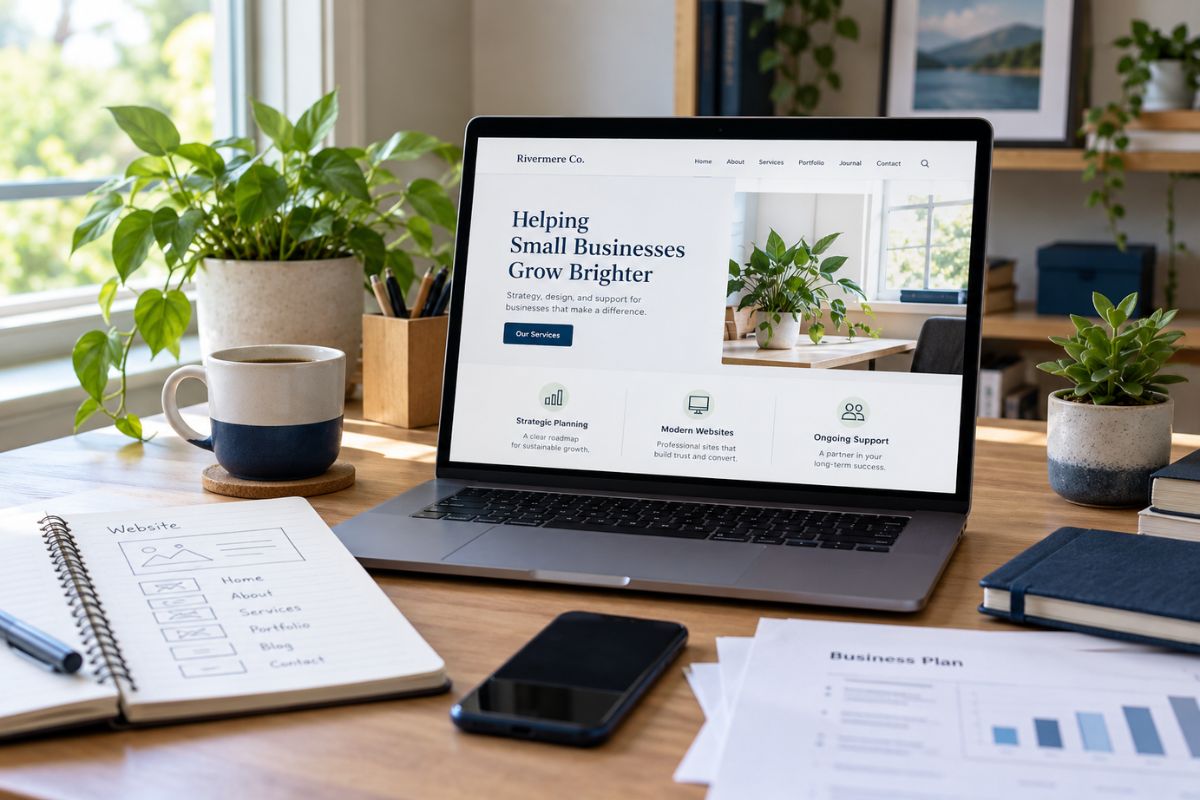
Your website should… What that means Tell people they’re in the right place Make it clear who you help and what you offer Build confidence in your business Give people enough information to decide whether they trust you Capture the connection Give visitors a reason and a way to stay in touch Move people toward an offer Make the next step obvious
If your website isn’t doing those things, adding more pages probably isn’t the answer.
Does Your Website Tell the Right Person They’re in the Right Place?
This is where I’d start. Someone should be able to land on your homepage and understand fairly quickly what kind of business they’re looking at.
That sounds obvious, but it isn’t. I’ve seen plenty of attractive websites where I still couldn’t figure out what the person actually did. There was a beautiful photo, a nice logo, something about passion or purpose, and maybe a sentence about empowering people.
Okay. But what are you selling?
Your homepage doesn’t have to explain every detail of your business. It does need to give the visitor enough information to decide, “Yes, this is for me.”
Who do you help? What do you help them do? What can they do next? Those questions matter a lot more than whether the homepage has the perfect font.
Your About page matters here too, especially when your experience is one of the reasons someone should choose you. People may care about your story, but they also want to understand how that story connects to what you can help them with now.
Does Your Website Make It Easier to Trust You?
Before I buy from somebody I don’t know, I usually look around. I’m guessing you do too.
I want to see whether the business makes sense, who’s behind it, and what the offer actually is before I hand over my email address, schedule a call, or pull out a credit card. Your website gives people the chance to do that without putting them on the spot.
They can read an article, look at your services, see your products, read your About page, find testimonials, and look at your policies. They may leave and come back later, and that’s normal.
You don’t have to convince everybody the first time they land on your site. You do need to give interested people enough information to keep moving.
I think this is where a lot of small business websites go wrong. They either say almost nothing because the owner is afraid of sounding salesy, or they say so much that the visitor has to work to figure out what’s important.
Clear usually wins.
Does Your Website Give All Your Marketing Somewhere to Go?
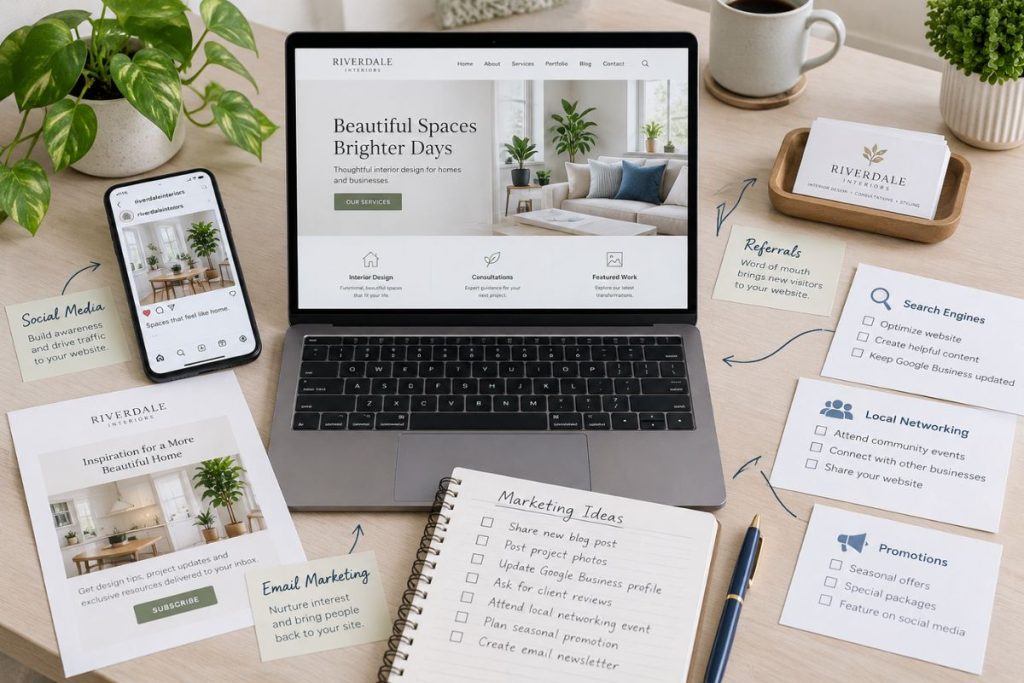
This may be the biggest reason I want you to have your own site. Think about all the places you might be marketing your business: Facebook, Pinterest, Instagram, YouTube, Google, email, local networking, podcasts, craft fairs, referrals, or wherever your customers already spend time.
None of those has to do every job. A Pinterest pin can introduce somebody to an idea. A Facebook post can start a conversation. An email can bring somebody back. A referral can get your name in front of the right person.
Your website can be the place they all point to.
That changes how I think about marketing because you stop treating every platform like a separate little business. You’re building one business, and the platforms are simply ways people discover it.
If you’re still working on the basic pieces of your site, choosing the right website platform matters far less than choosing something you can maintain and actually use. You don’t win because you picked the fanciest software. You win because the site helps the business do its job.
Does Your Website Help You Stay Connected With People?
A visitor who leaves your website may never come back, so I don’t want the website to end with “Thanks for stopping by.” Give people a way to stay connected.
That may be an email signup, a useful guide, a checklist, a short workbook, a contact form, or a booking link. The right choice depends on what you’re selling, but there should be something.
This is one of the reasons I care so much about email lists. You can have a lot of people see something you post somewhere and still have no reliable way to reach those people again.
An email address changes that because now you’ve got permission to continue the conversation. And you don’t need some giant free course to get somebody to sign up. A focused lead magnet that solves one useful problem can be enough.
The important part is that it connects naturally to what you eventually want to sell.
Does Your Website Make the Next Step Obvious?
This one sounds simple, but go look at a few small business websites and you’ll see why I’m bringing it up. Sometimes I honestly can’t tell what the owner wants me to do next.
Call? Book? Buy? Subscribe? Read another article? Send a message?
A visitor shouldn’t have to solve a puzzle.
Every important page should have a reason for existing and a next step that makes sense. An article about a problem might point to a checklist. The checklist might lead into your email sequence. A services page might invite someone to book a call. A product page might send them to checkout.
Your website doesn’t need to push everybody toward the same action. It does need to stop leaving people at dead ends.
Do You Need a Big Website to Do All of This?
No, and I think this is where people waste an unbelievable amount of time. They start thinking about all the pages they might eventually need, then the blog, then the shop, then the resource library, then the funnel, then the membership.
Pretty soon they’re planning a 75-page website for a business that hasn’t sold anything yet.
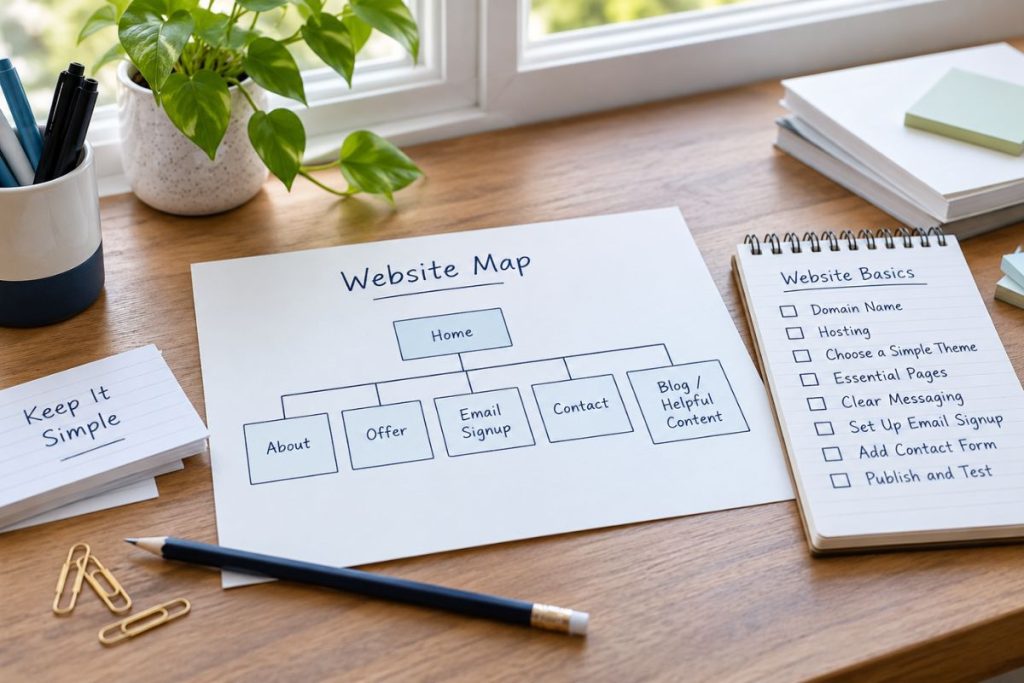
I’d rather see you build the useful part first. For many businesses, that may mean:
- A homepage that clearly explains what you do.
- An About page that gives people a reason to trust you.
- A page for your main offer.
- A way to join your email list.
- A contact page.
- A few useful pieces of content that answer real customer questions.
That’s enough to build on. You can add more when there’s a reason to add more.
If you’re sorting out the technical foundation, your domain name and web hosting are worth getting right, but neither one should become a six-week research project. Pick something sensible and move on to the part customers actually see.
How Do You Know Whether Your Website Is Helping Your Business?
Don’t judge it by how pretty it looks. Look at what people do.
Are they joining your list? Are they clicking through to an offer? Are they contacting you? Are certain articles bringing in the right kind of visitor? Are people landing on your site and then moving to another useful page?
Those questions tell you a lot more than staring at total traffic. I’m much more interested in whether the right people are doing something useful than whether a random page got a spike in visits.
You also don’t need to check this every morning. I know how easy that is to do because I’ve done it. One day traffic goes up and you think you’ve finally cracked it. The next day it drops and suddenly you’re wondering whether the whole business is doomed.
That’s not useful.
Look for patterns over time and make decisions from those.
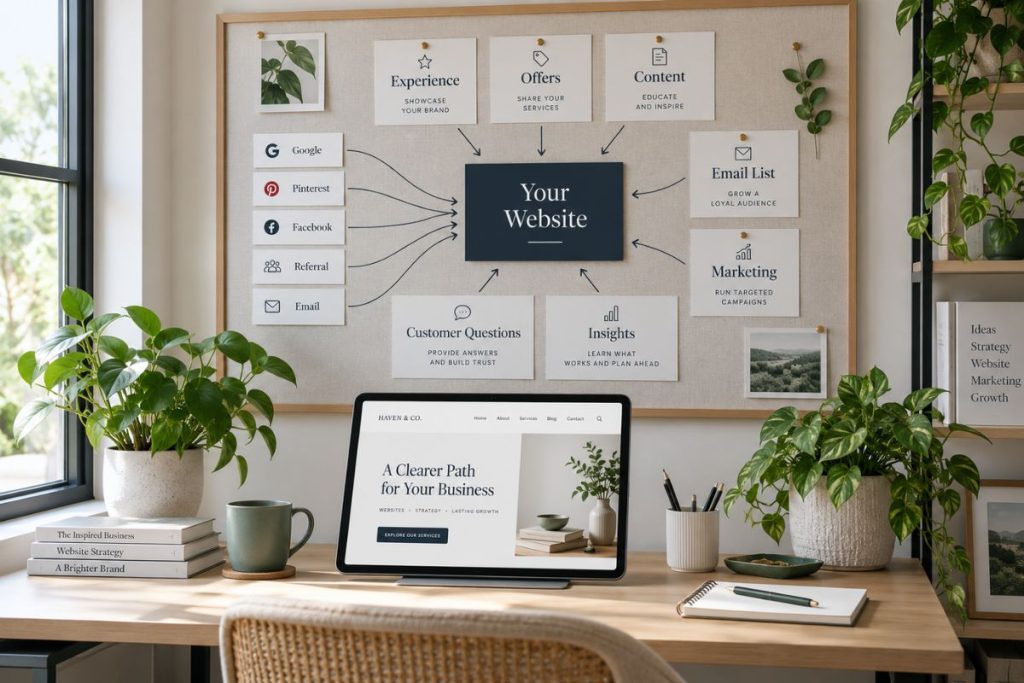
Why You Need a Business Website Comes Down to Control and Direction
Here’s what I want you to take away from all of this. Your website is not the business, and having one doesn’t automatically make the business work.
But it gives you a place to bring everything together: your experience, your offers, your content, your email list, your marketing, your customer questions, and the things you’re learning about what people actually want from you.
That’s why I don’t think you need an enormous website. I think you need one that knows what its job is.
When someone finds you through Facebook, Google, Pinterest, a referral, an email, or somewhere you haven’t even thought of yet, they should land somewhere that makes the next step easier.
That’s really why you need a business website.
Frequently Asked Questions
Do I need a website if most of my business comes from referrals?
I would still have one. A referral may introduce you, but many people will look you up before they contact you. Your website gives them somewhere to understand what you do on their own time.
Can I run my business using only Facebook or Instagram?
You can use social platforms as important marketing channels, but I wouldn’t make one of them the only home for your business. Your website gives you a central place for your offers, content, email signup, and contact information.
What pages should a small business website have first?
Start with a clear homepage, an About page, a page for your main offer, a contact page, and a way to join your email list. Add more when your business actually needs more.
Do I need a blog on my business website?
Not every business needs one. But if people search for information related to what you sell, useful articles can give them another way to discover your business and understand your expertise.
Should I redesign my website before I start marketing it?
Probably not, unless the site is genuinely confusing or broken. Make sure people can understand what you offer and what to do next, then improve the design as you go.
What should I fix first if my website isn’t bringing in business?
Start with clarity. Look at your homepage and offer pages and ask whether a stranger could quickly understand who you help, what you sell, and what they should do next.