
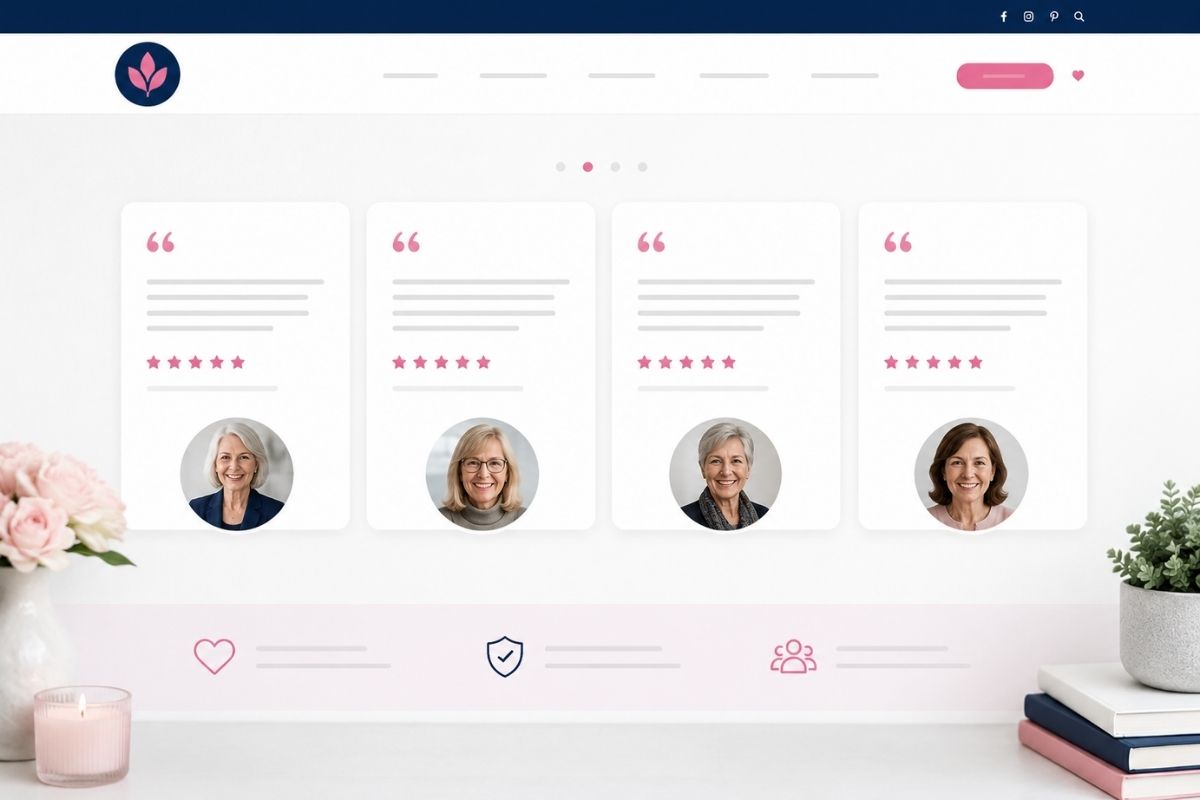
How to Get Testimonials When Just Starting Out
Learning how to get testimonials when you’re just starting out feels like one of those classic catch-22 problems. You need social proof to land clients. But you need clients before you have social proof.
It’s a real frustration, and I hear about it all the time. The good news? You don’t have to wait for a paying client to start building credibility. There are honest, practical ways to get your first testimonials even when your client list is blank.
Why Does Social Proof Matter So Much for a New Business?
When someone finds your blog or your offer for the first time, they don’t know you. They’re scanning for signals that tell them you’re worth their time and money. Social proof is one of the fastest trust builders there is.
Customer reviews and client endorsements tell potential buyers that someone else already took that leap and it paid off. Without that, you’re asking people to jump into the unknown, and most won’t.
This is especially true in the early-stage business world. You may have decades of experience and a genuine ability to help, but a blank testimonials section creates doubt. Online reviews matter even when you’re brand new.
Who Can You Actually Ask for Initial Testimonials?
This is where most people get stuck. They assume testimonials can only come from people who paid them. That’s not how it works.
Think about the people you’ve already helped, even informally. Did you walk a friend through setting up her Etsy shop? Help a colleague figure out her next career move? Those people already know what it’s like to work with you, and they can speak to your customer experience in real terms.
Those people are a genuine starting point for your testimonial collection. Reach out and ask if they’d be willing to share a few sentences about working with you.
You can also offer your service to a handful of people in exchange for honest customer feedback. This isn’t about giving your work away permanently. It’s a deliberate new business strategy to gather initial testimonials before your formal launch. Even two or four genuine responses can completely shift how your offer looks to someone seeing it for the first time.
If you’re not yet clear on what you’re offering, it’s worth getting clear on your profitable knowledge assets first. Build something solid, then ask people to vouch for it.

How Do You Make a Testimonial Request Without Feeling Awkward?
Testimonial outreach is the step that trips people up, and it usually comes down to how people feel about themselves. If you’re already dealing with imposter syndrome, asking someone to publicly endorse you can feel like a huge imposition.
Here’s a reframe that helps: you’re not asking for a favor. You’re inviting someone to share their experience, which might genuinely help another person make a good decision.
When you make the testimonial request, keep it specific and easy. Don’t say “Can you write me a testimonial?” Instead try something more focused: “Would you share a few sentences about what changed after we worked together, and what you’d tell someone who was considering working with me?”
A prompt like that makes it far less overwhelming for the person responding, and the result will be much more useful to you.
What Makes a Testimonial Actually Worth Having?
Not all client reviews pull equal weight. “She was great!” is a nice thing to hear, but it doesn’t do much for customer trust on a sales page.
The testimonials that actually build your business reputation have a shape to them. They describe a real customer experience with a before-and-after arc.
What was the person struggling with, and what actually changed? That structure tells a story that vague compliments never can.
When you do testimonial collection, look for that pattern. If someone sends you something general, it’s fine to follow up and say, “Would you be comfortable adding a sentence about what specifically changed for you?” Most people are happy to.
Once you have a handful of strong client endorsements, your reputation starts building its own momentum.
What you say about yourself carries so much more weight when your clients are saying the same thing, and that’s when building trust while promoting products starts to feel effortless.

Can You Use Testimonial Incentives Without Crossing a Line?
Testimonial incentives can feel murky, so let me draw a clear line.
Offering something in exchange for feedback is fine, whether that’s a discount on a future service or a simple thank-you resource. What’s not okay is tying the reward to a positive outcome. Incentivize the act, not the content.
“Share your honest experience and I’ll send you something as a thank-you” is ethical. “Leave a five-star review and get 20% off” is not.
The difference matters both for your integrity and for your long-term customer satisfaction. If readers sense your reviews were nudged toward praise, the customer trust you worked to build erodes fast.
If you’re working toward launching your first digital product or service, a handful of honest early testimonials can genuinely improve how well it converts. Leveraging testimonials ethically is startup marketing done right.
Where Should You Display Your Client Testimonials?
Gathering testimonials is half the work. Getting those words in front of the right people is the other half.
Your sales page is the obvious place to start. Beyond that, think about your About page and your email welcome sequence.
Any relevant blog post where you’re making a recommendation is another good spot. A testimonial placed right where someone has a question is far more powerful than one buried on a page they’ll never find.
The same principles that go into writing product reviews that convert apply here too. Both work because they give the reader a real person’s honest account instead of a sales pitch.

What’s the Best Way to Get Testimonials When You’re Just Starting Out?
Learning how to get testimonials when you’re just starting out isn’t complicated. Identify who you’ve already helped and make a specific, genuine ask.
You don’t need a wall of five-star reviews before you launch. You need a few honest words from real people who’ve experienced what you do. Ask clearly and let what they say speak for you.
Customer trust is built one experience at a time. That’s how you learn how to get testimonials when you’re just starting out. Begin with what you already have and build honestly from there.
Frequently Asked Questions
Can I use testimonials from people I helped for free?
Yes. Testimonials reflect the quality of the customer experience, not the price paid. A genuine endorsement from someone you helped at no charge is completely valid and often very specific.
How many testimonials do I need before I launch?
Two to four solid, specific ones are enough. A handful of honest client reviews carry more weight than a long list of vague compliments.
What if no one responds to my testimonial outreach?
Follow up once after about a week. If someone still doesn’t respond, move on. Focus your energy on the people who seemed most genuinely enthusiastic about working with you.
Should I ask for written testimonials or video?
Start with written client endorsements since they’re easier to provide and easier to display across platforms. Video testimonials add strong social proof but require more from the person providing them.
Is it okay to edit a testimonial for grammar or typos?
Yes, with the person’s permission. Never change the meaning or add words they didn’t write. Always share the final version before publishing so they’re comfortable with how it reads.