Building a Simple Sales Funnel Without the Tech Overwhelm
Building a simple sales funnel sounds like something you need a tech degree for, but I promise you, it doesn’t have to feel that way.
The first time someone told me I needed a funnel, I pictured complicated software, a dozen moving parts, and about six months of frustration. What I found out later is that the basics are actually pretty manageable, and once they click, the whole thing starts to feel like a normal part of running your business online.
If you’ve ever looked at your blog and wondered why people read your posts but nothing ever really happens, a funnel is probably the missing piece.
What Are Sales Funnel Stages and How Do They Work Together?
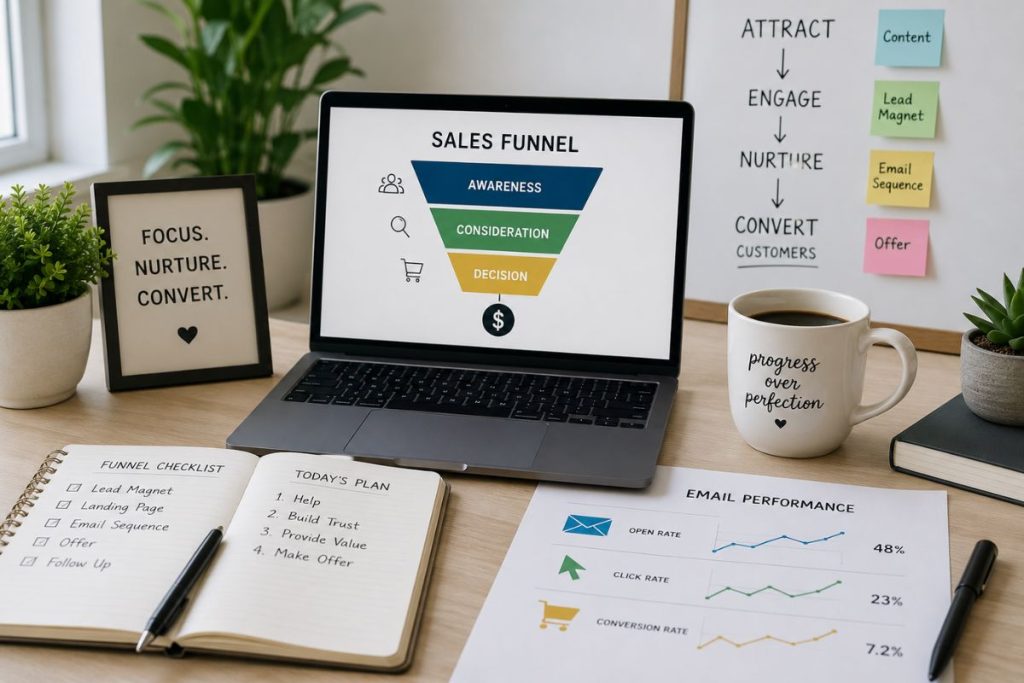
The sales funnel stages are really a map of the path your reader takes from stranger to customer. It starts with the awareness stage, when someone first discovers you.
Then comes the consideration stage, when they’re reading your content, sizing you up, and deciding if they trust you.
Finally, they hit the decision stage, where they’re ready to actually buy something.
Most of us are pretty good at the top of that map. We write content, people find us, and they read a post or two. The breakdown tends to happen in the middle and at the bottom, and that’s exactly what a funnel fixes.
Who Is Your Target Audience Before You Build Anything Else?
Before you touch a single tool or write a single opt-in form, you need to be clear on your target audience. This means getting specific about who you’re trying to reach and what they’re struggling with right now.
Your buyer persona isn’t “women over 50.” It’s “women over 55 who want to start a blog about wellness but feel completely overwhelmed by the tech side.”
The more specific you get, the easier everything else becomes. Solid niche research will tell you not only who your people are but what words they use to describe their own problems, which is gold when you’re writing your content and offers.
The customer journey for your audience is the route they travel from discovering you to trusting you enough to buy. Understanding that journey shapes every other decision you make as you build.

How Does a Lead Magnet Kick Off Your Lead Generation?
A lead magnet is a free resource you offer in exchange for someone’s email address, and it’s your entry point into lead generation. It could be a checklist, a short guide, a printable, or a resource list. Whatever it is, it needs to solve one specific problem for your target audience.
Think about what your reader is trying to figure out right now, today, and give them a quick win around that. Attention-grabbing headlines matter here because your lead magnet title is essentially an offer, and it needs to feel irresistible to the right person.
Once someone downloads your lead magnet, they’re in your email opt-in sequence, and your sales process has officially begun.
What Should Your Landing Page Actually Do?
Your landing page has one job: get the visitor to take action. That’s it.
A good landing page speaks directly to a pain point, explains what the freebie is and why it matters, and ends with a clear call to action. Remove every distraction. If it’s not pushing the reader toward that one action, it doesn’t belong on the page.
The conversion rate on a focused landing page is almost always higher than one that tries to do too many things.
The copy on this page matters a lot. If you want to go deeper on writing pages that actually move people to act, writing sales pages that convert walks you through the structure and the language that works.
Keep the design simple. What you need is a clear headline, a short explanation of what they’re getting, a visual if you have one, and a button that tells them exactly what to do next.
How Does Email Marketing Keep Your Sales Pipeline Moving?
Once someone’s on your list, email marketing earns its place in your business. The goal now is nurturing leads, which means building the kind of trust and connection that makes people actually want to buy from you later.
Your sales pipeline is the path from new subscriber to paying customer, and email is how you move people through it.
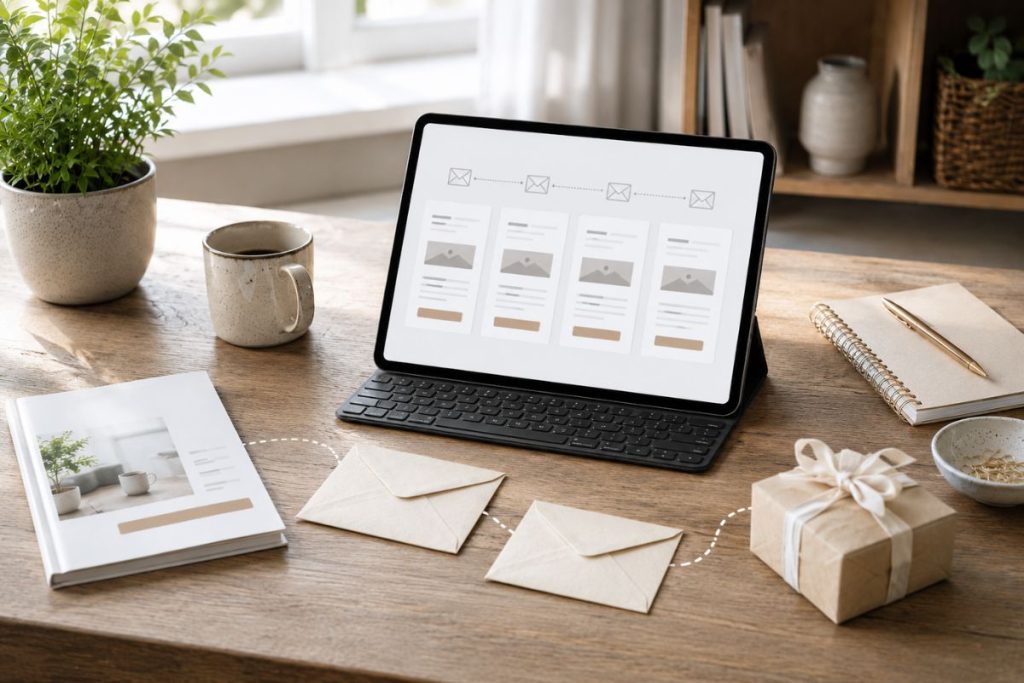
A drip campaign, which is a series of pre-written emails that go out automatically, introduces you, shares your perspective, offers genuinely useful content, and eventually brings people to your offer.
Marketing automation makes this manageable. Tools like ConvertKit or MailerLite let you set this up once and it runs on its own. You don’t have to manually email every new subscriber, and you get to focus on other things.
What Does Prospect Engagement Look Like in a Real Blog Business?
Prospect engagement is really about staying present and relevant to the people who’ve raised their hand and said they want to hear from you.
This is where content marketing does the heavy lifting. Your blog posts, your emails, your Pinterest content, and your social media updates all build the relationship.
You should not be cranking out as much as possible, you should be showing up consistently with things that actually help. Repurposing blog content is one of the smartest ways to keep showing up without burning yourself out.
Customer relationship management at this level doesn’t require fancy CRM software. It can be as simple as tagging subscribers by interest and sending them content that’s relevant to where they are in their journey. Most email platforms have basic customer segmentation built right in.
How Do You Improve Sales Conversion Without Getting Buried in Data?
Sales conversion is what happens when a prospect becomes a buyer. Improving your conversion rate doesn’t have to mean drowning in analytics.
Start by watching two things. What’s your email open rate, and how many subscribers are actually clicking through? Those numbers will tell you where to start with your funnel optimization.
A/B testing sounds technical, but it’s really about trying two versions of something and seeing which one performs better. You can test an email subject line, a landing page headline, or a button color. Pick one element at a time, give each version enough runway, and let the data tell you what’s working.
As your list grows and your offers develop, knowing how to price what you’re selling becomes its own skill. Pricing your first digital product is worth reading before you put your first offer out into the world.
Building a Simple Sales Funnel Means Playing a Longer Game
Building a simple sales funnel isn’t really about making the first sale. It’s about what happens after.
Customer retention is where the real business lives. A buyer who had a great experience will come back and buy again, often bringing others with them. Your job after someone purchases is to make sure they actually get a result and feel good about working with you.
That starts with a simple follow-up email after the purchase. Deliver what you promised. Check in a week or two later. Make sure they got what they came for and that they know you’re there if they have questions.
Building a simple sales funnel is something you look at and improve over time. You don’t need to have it perfect before you start. A version that’s actually running will always beat a perfect one that’s still sitting in your head.
Frequently Asked Questions
Do I need expensive software to build a sales funnel?
No, and you don’t need to go paid until you’re ready. Most free tiers on platforms like MailerLite or ConvertKit are more than enough to get started.
How long does it take to see results from a sales funnel?
Most bloggers start seeing traction within 60 to 90 days of having a funnel running consistently. The key word is consistently, so start simple and keep going.
What’s the difference between a sales pipeline and a sales funnel?
A sales funnel describes the path a buyer travels from awareness to purchase. A sales pipeline is about the steps you as the seller are managing to move them forward.
How do I know if my funnel is working?
Pay attention to your email open rates and how many subscribers actually become buyers. Low click-throughs point to a content problem; low sales point to an offer or landing page issue.
Can I build a sales funnel without a big email list?
Absolutely. A small, engaged list of the right people can convert far better than a large, cold one. Focus on attracting the right subscribers and the size will follow.