What Makes Your Offer Different As A Blogger?
A question that you need to ask yourself is what makes your offer different especially if your blog is starting to feel exactly like the fifty other blogs already covering that topic.
This has happened to me a few times. I remember reading three other blogs in one afternoon and realizing my draft post said almost nothing they hadn’t already said, in my own words.
That feeling passes. But only once you figure out what actually separates your version of this from everyone else’s version. And no, it isn’t a fancier logo or a longer post. It’s something much more subtle than that.
What Makes Your Unique Value Proposition Different From Theirs?
Your unique value proposition is the specific reason someone chooses your blog over the ten other tabs they have open. It isn’t a slogan. It’s the honest answer to “why here, why now.”
Most new bloggers skip this step entirely. They pick a niche and start publishing, hoping readers figure out the appeal on their own.
Readers won’t do that work for you. They’re scanning fast, and if your brand positioning doesn’t tell them what they get here that they can’t get elsewhere, they close the tab.
You have to understand that market differentiation and competitive advantage aren’t about being the only person writing about your topic. It’s about being the clearest version of it.
When I did a quick competitive analysis of other blogs in my space, I wasn’t looking for gaps nobody had found. I was looking for what everyone was saying in a way that felt distant, clinical, rushed, or overly formal, so I could say the same true thing in a way that felt like a conversation instead.
The way you show your customer value is by being specific. Not “I help people blog,” but “I help people over 50 build a blog around the career or hobby they already spent decades mastering, without pretending they’re 25.” That second version tells someone exactly what they’re getting and who it’s for.
How Do You Find Your Niche Expertise?
You find your niche expertise by looking at what you already know cold, and not what sounds impressive on paper. You have to realize that specialized knowledge doesn’t need a certificate. It needs depth, and that depth is usually hiding in the years you spent doing something ordinary really well. You just don’t realize it because you’ve been doing it so long.
If you spent thirty years running a school library, you have subject matter expertise that most bloggers writing about education simply don’t have.
If you’ve spent forty years gardening in the same difficult clay soil, you have expert insights that someone with a perfect greenhouse and six months of experience cannot fake.
This is where authenticity does its heaviest lifting. Genuineness, honesty, transparency, and a refusal to perform expertise you don’t have will carry your writing further than borrowed authority ever could.
Readers can tell the difference between someone repeating advice they read somewhere and someone who’s lived it. Trustworthiness isn’t just a tone you use. It’s the natural result of only claiming what’s true.
Your target audience isn’t everyone who might enjoy your topic. It’s the specific person who needs your specific angle on it. Narrowing that down usually feels scary at first, like you’re turning readers away.
But it’s truly just the opposite. A tightly defined audience engages more, shares more, comments more, and trusts you faster, because they feel like you wrote the post directly to them.
How Does Content Quality Set You Apart From Every Other Blog Covering This?
Content quality will set you apart because most blogs in any niche are publishing the same old recycled advice, and readers notice even when they can’t articulate why one post feels better than another.
Originality, relevance, readability, and credibility do the quiet work of keeping someone on your page past the first paragraph.
Content consistency matters as much as any single post. An editorial calendar and a brand voice that stays steady from post to post build the kind of content reliability that turns a one-time visitor into someone who checks back. You don’t need to publish daily. You just need to publish on a rhythm people can predict.
Storytelling techniques are where a lot of bloggers leave value on the table. A clear narrative structure, honest imagery, real pacing, and an honest point of view turn a how-to post into something someone actually remembers a week later.
You don’t need plot devices or dialogue writing skills from a novel. You need to let your own experience shape the direction of the post, instead of burying it under generic bullet points. I’ve struggled with this. I get so caught up in the technical side of things, I forget the human side.
Content diversification and content innovation keep your work from going stale, and that doesn’t mean chasing every new format. It means occasionally trying a different angle on a topic you’ve covered before, or presenting information in a way your competitors haven’t tried.

So How Do You Build a Personal Brand People Remember?
You build a memorable personal brand by being consistent about who you are across every place someone encounters you, not by designing something flashy. Brand identity is less about visuals and more about voice, though visual branding still matters.
Use a simple, readable color palette and a logo that doesn’t try too hard support brand consistency without demanding a design degree.
Graphic design tools like Canva are simple enough that you can put together clean visual storytelling without hiring anyone. What matters is that it looks like the same person made every post, not that it looks expensive.
User experience ties directly into this. Usability, a clear information architecture, simple interaction design, and straightforward visual design is what determines whether someone actually reads your post or gives up halfway through because the site feels cluttered. White space is your friend.
Thought leadership doesn’t come from claiming authority. It comes from a reader finishing a post and coming back, because the experience of reading you was easy.
You have to be aware of reputation management, and in a blog this size, this mostly means answering comments honestly and correcting yourself when you’re wrong. That’s it. That’s most of what “managing your reputation” looks like for a real person writing to real readers.
How Do You Get Found By The Right Readers In The First Place?
Sure, you need to be doing SEO optimization, but be sure that you are doing it in a way that serves readers first and search engines second, because that order is the only one that actually works long term.
Keyword research isn’t about stuffing a phrase into every sentence. It’s about noticing the actual words people type when they’re looking for what you offer.
On-page SEO covers your titles and your meta tags, plus the headers that break up a post, all doing the quiet job of telling both readers and search engines what a post is actually about.
Site speed optimization and mobile optimization matter because most of your readers are on a phone, often with a slower connection than you’d expect, and a page that loads slowly loses people before they read a word.
Off-page SEO and backlink building happen naturally once your content marketing is strong enough that other bloggers want to reference you.
You don’t chase links. You write something worth linking to, and check your SEO analytics occasionally to see what’s actually working instead of guessing.
Search engine ranking isn’t the goal by itself. It’s the byproduct of writing something genuinely useful, formatted so it’s easy for both a person and a search engine to understand.

How Do You Turn Readers Into A Real Community?
You turn readers into a real community by treating audience engagement as an ongoing conversation instead of a one-way broadcast. A call to action at the end of a post only works if you actually read and respond to what comes back.
Social media strategy extends your reach, but it works best when you pick a platform or two instead of trying to maintain a presence everywhere.
Content marketing on social media and simple analytics and metrics tracking help you understand where your energy is actually landing, whether or not you add paid advertising into the mix.
Community management, whether that’s a Facebook group or comments on your own posts, needs consistent attention more than clever strategy.
Email marketing deserves more respect than most new bloggers give it. Building a subscriber list through newsletter marketing and using light email automation for lead nurturing gives you a direct line to readers that no algorithm change can take away from you, especially once you start testing your open rate and click-through rate.
A/B testing your subject lines and personalization in your emails both improve results, but starting simple beats waiting until you’ve mastered every feature.
Community building, at its core, is networking and engagement done consistently over time. Online forums, user interaction in your comments, genuine content sharing between readers, and simple collaboration with fellow bloggers all build the kind of audience growth and brand loyalty that advertising can’t buy.
Should You Team Up With Influencers To Stand Out?
You should consider influencer partnerships once you have an audience worth partnering around, not before. Brand collaborations and cross-promotion work when there’s real audience overlap, and sponsored content follows the same rule: it falls flat when it feels forced.
Affiliate marketing is often the easiest first step into this kind of partnership. Recommending products you actually use, with honest context about why, builds trust rather than spending it.
Social media campaigns built around a genuine relationship with another creator tend to outperform anything that reads like a paid advertisement, because readers can tell the difference.
Brand ambassadors and formal influencer marketing strategy make sense for bigger operations. For most bloggers in this stage, a simple content creation collaboration with someone whose audience trusts them is plenty. Digital marketing doesn’t require every tactic at once. It requires the right one for where you actually are.
So, What Makes Your Offer Different As A Blogger When It’s Time To Earn From It?
What makes your offer different as a blogger, when you’re ready to monetize, is that you’ve already built something worth paying for instead of scrambling to package generic content after the fact. Monetization strategies work best when they grow out of everything covered above, not instead of it.
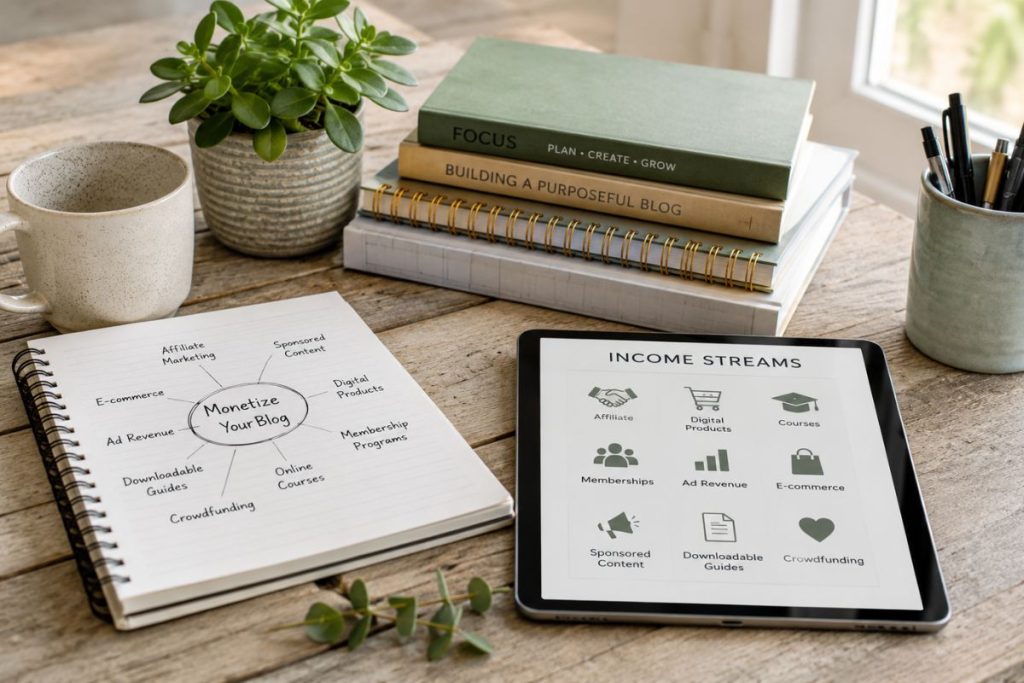
Affiliate marketing and sponsored content are common starting points, but digital products, membership programs, online courses, and simple downloadable guides let you package your specialized knowledge directly.
A gardener with forty years of clay-soil experience can turn that into a seasonal planting guide. A retired accountant can turn decades of tax season stress into a simple budgeting course for other retirees.
Ad revenue and e-commerce integration can layer on top once traffic supports them, and crowdfunding works for readers who want to support a specific project rather than buy a product.
None of these require picking only one. Most established blogs run two or four income streams at once, adjusting as they learn what their specific readers respond to.
Here’s what I want you to take from all of this: what makes your offer different as a blogger was never going to be a single tactic. It’s the sum of your actual expertise, your honest voice, your consistency, and your willingness to keep showing up as yourself instead of a copy of someone else’s blog.
That combination is the one thing nobody can duplicate, because nobody else has lived your exact version of this life. If you’re still working out where your own angle fits, finding your unique voice as a retirement blogger is a good next stop, and building out a clear avatar for your target audience will sharpen everything else on this list.
Frequently Asked Questions
What if my niche already has a hundred blogs in it?
That’s usually a sign the niche is profitable, not that you’re too late. Finding gaps in crowded markets matters more than finding an empty one.
Do I need a professional logo to look legitimate?
No. Consistency matters more than polish. A simple, clean design you actually use everywhere beats an expensive logo that only lives on your homepage.
How long before my unique value proposition feels natural to write about?
Most bloggers need a handful of posts before it clicks. Keep circling back to what you specifically offer that others don’t, and it sharpens with practice.
Is it too late to reposition if my blog already feels generic?
Not at all. Revisit your existing niche research and rewrite your core pages around what actually makes you different. Readers won’t hold the old version against you.
Should I focus on SEO or on building an audience first?
Both, but lightly at first. Write for your reader and format for search engines, letting the two reinforce each other instead of treating them as separate jobs.
What’s the fastest way to figure out my own differentiation?
Ask yourself what people already come to you for advice about, even outside blogging. That’s usually your answer, and it connects directly to what problem your blog actually solves.
Can I change my offer later without losing readers?
Yes. Readers who found you for your honesty and consistency will follow a sharpened focus. The ones who leave weren’t your real audience anyway.