Pricing Your First Digital Product And Eliminating The Confusion
Okay. You’ve created your first digital product and now you’re staring at the hardest question: what should I charge for this?
Pricing your first digital product can feel like walking through a minefield blindfolded. Too high and nobody buys. Too low and you undervalue your work while leaving money on the table.
So very often, people either copy what they see others charging or they panic and price way too low.
Neither approach works well.
But there’s a better way to figure this out, and you don’t need an MBA or complicated spreadsheet formulas to get it right.
What Determines Digital Product Pricing Anyway?
Digital product pricing depends on several factors that you can actually control.
First, you need to understand what your audience can afford and what they’re willing to pay. These aren’t always the same thing. Someone might have $500 in their budget but won’t spend it on something they don’t fully trust or understand.
Another thing is that your pricing strategy needs to match where you are in your business. If you’re brand new with no audience, your approach looks different than someone with an established following and proven results.
And then, the type of digital product matters. An eBook typically sells for less than a course, which sells for less than coaching or consulting. That’s not arbitrary at all. It all reflects the perceived value and level of personalization involved.
How Do You Research What People Will Actually Pay?
Market research doesn’t have to be fancy or expensive.
You should start by seeing what similar products cost. Look for creators serving the same target audience with comparable offerings. Write down what they charge, what’s included, and how they position their products.
But don’t just copy their numbers. Use them during your research to understand the landscape.
Then talk to real people. This can be difficult for new people but, ask your email list, or your social media followers what they might expect to pay for something like what you’re creating. You might be surprised at their answers.
Listen closely as to how people describe their problems and what solutions they may have already tried. This tells you about how they perceive the value it gives them.
Should You Use Value-Based Pricing for Your Product?
Value-based pricing simply means charging based on the results your product delivers rather than what it costs you to create.
This approach makes sense for digital products because your creation costs are mostly upfront time and effort. Once it’s built, selling one copy or one hundred copies doesn’t change your costs much.
Say your course helps someone land a $60,000 job, charging $297 feels reasonable because the value delivered is massive compared to the price.
The challenge with this is that you need to clearly communicate that value. You can’t just say your product is valuable. You need to show why or how.
Value-based pricing works best when you understand your audience deeply and can articulate exactly how your product solves their specific problem.

What About Cost-Plus Pricing?
Cost-plus pricing means figuring out what something costs you to create and then, adding a profit margin on top.
For digital products, this gets weird fast because your main costs are time and possibly some tools or software.
So do you factor in the 40 hours you spent creating content? What about the years of experience that made you qualified to teach this topic?
Many creators who are using cost-plus pricing end up undercharging because they forget to value their expertise and time properly.
With that being said, knowing your costs is important. If you’re paying for software, hosting, or contractors, you need to cover those expenses and still make profit. Just be sure that you don’t let cost-plus be your only pricing consideration for digital products.

How Does Competitive Pricing Fit In?
Competitive pricing means looking at what others charge and positioning yourself in relation to them.
This matters more than some experts want to admit. If everyone else selling beginner guitar courses charges $50-$150, you’ll have a hard time convincing people your course is worth $997 unless you can clearly explain why.
But competitive pricing does not mean matching the lowest price you find. That’s a race to the bottom that nobody wins.
Instead, position yourself strategically. You can be the premium option, the middle-of-the-road choice, or the budget-friendly alternative. Each position requires different messaging and targets different segments of your target audience.

What Pricing Models Work for Digital Products?
Different pricing models serve different goals.
One-time payments are the simplest. The customer pays once and gets lifetime access. Clean and straightforward, but you will miss out on recurring revenue.
Subscription pricing creates recurring income. Monthly or annual payments give you revenue so you know what you are getting each month for the most part. This also forms deeper customer relationships.
The freemium model can be an option as well. This is where basic features are free but premium features cost money.
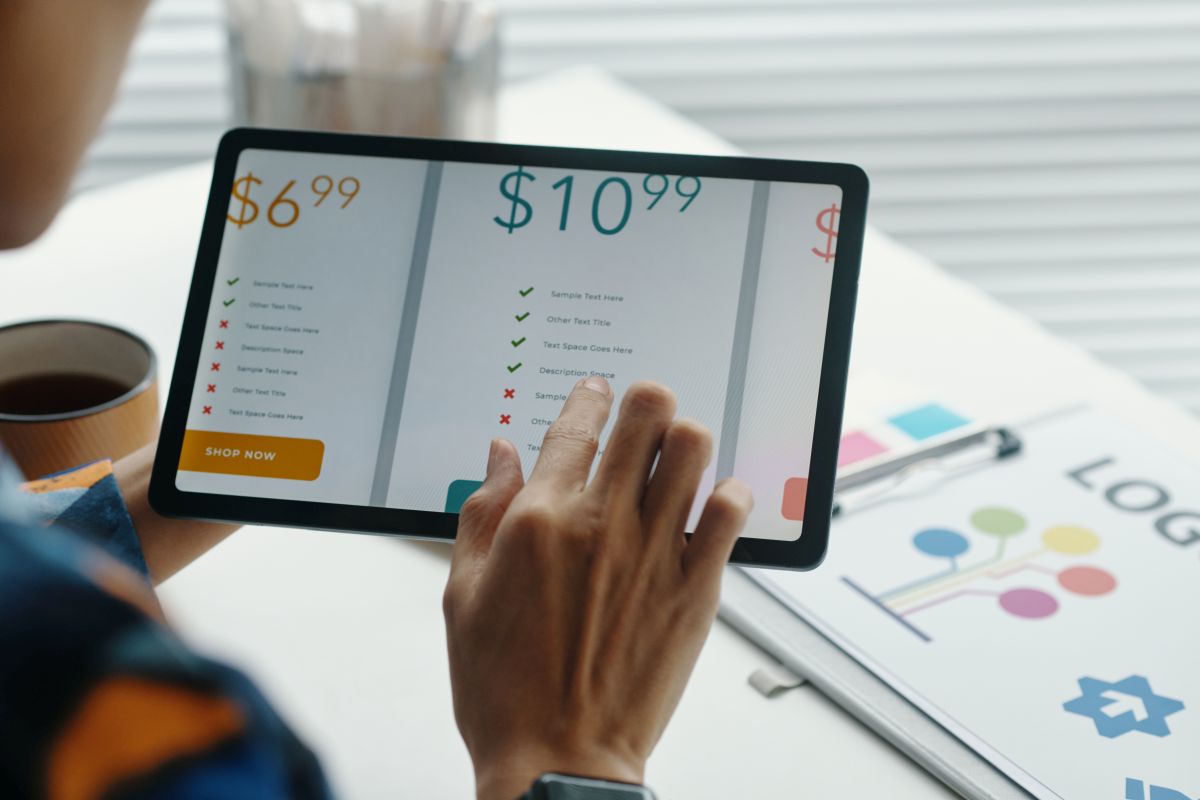
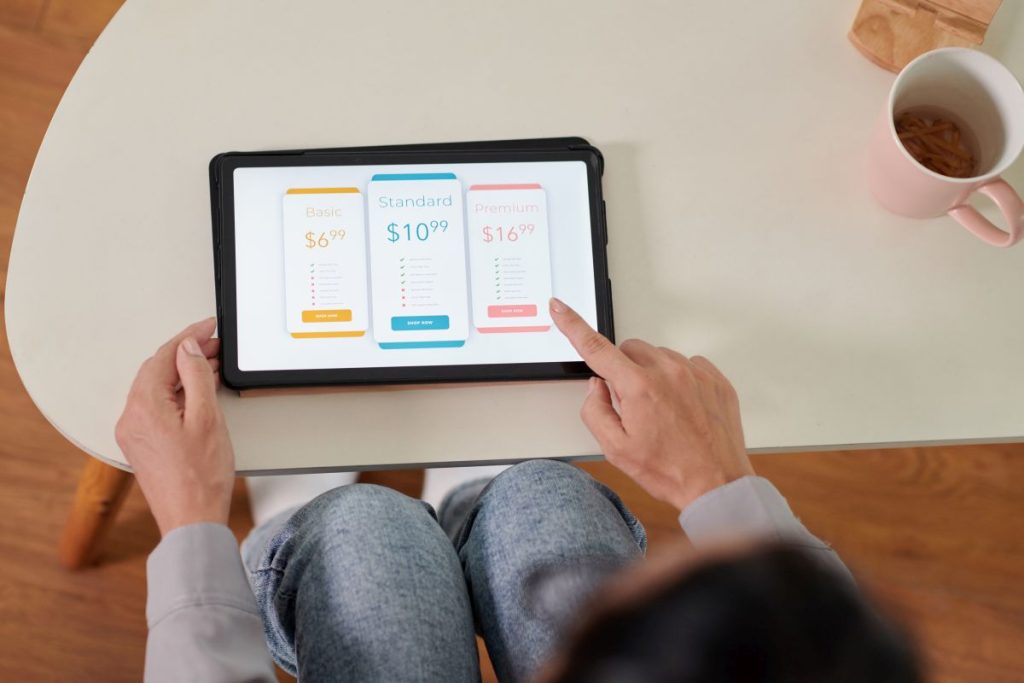
Tiered pricing offers multiple levels at different price points. Maybe your basic package is $47, your standard is $97, and your premium is $197. This lets customers decide based on their needs and budget.
Payment plans can break a larger price into smaller chunks which can be helpful for those who can’t afford a large price at one time. A $497 course becomes easier to buy when it’s $197 down and two payments of $197. Very often, creators charge extra for the payment plan purchase and rewards the people paying the entire cost at one time.
Why Does Pricing Psychology Matter so Much?
Pricing psychology influences how people perceive your offers in ways that feel almost magical when you understand them.
Charm pricing uses prices ending in 7 or 9 ($27 instead of $30) because our brains process them as significantly cheaper even though the difference is tiny. It’s been tested a million times and it works.
Price anchoring sets a reference point that makes other options seem more reasonable. Show a $997 option first, and suddenly $497 feels like a bargain even though it’s still a significant investment.
The tiered pricing I mentioned earlier also uses psychology. Most people avoid the cheapest option (seems too basic) and the most expensive (feels risky). They gravitate toward the middle option, which is often where you want them anyway.
How Do You Test Your Pricing?
Price testing means trying different price points to see what works best.
Start with what seems reasonable based on your research. Launch at that price and pay attention to conversion rates, customer feedback, and your own comfort level.
If people buy without hesitation or questioning, you might be priced too low. If you get lots of interest but few sales, you might be too high or failing to communicate the value clearly enough.
A/B testing works for this if you have enough traffic. Show half your audience one price and half another, then compare results. Do NOT just change prices randomly or constantly because that damages trust.
You can also test with early bird pricing or beta launches at a lower rate, then increase the price later once you’ve validated demand and gathered testimonials.
Should You Offer Discounts?
Discount strategies can work but they can be tricky.
When you constantly discount your products, this trains your audience to wait for sales rather than buying at full price. That’s fine if it’s intentional (think Black Friday sales), but terrible if it becomes your default because you’re worried nobody will buy otherwise.
Limited-time discounts create urgency without minimizing the value of your product long-term. Launch week pricing, seasonal sales, or celebrating milestones give you reasons to discount without making it permanent.
Bundle pricing offers multiple products together for less than they’d cost separately. This increases perceived value and can boost your profit margin if done strategically.
Just be sure to avoid the trap of discounting because you don’t believe in your own pricing. That’s more of a confidence issue and not really a pricing issue.

What Role Does Perceived Value Play?
Perceived value is how much your audience thinks your product is worth, which might be completely different from what it actually costs you to create or what you think it’s worth.
This is why product positioning matters so much. Two identical courses can sell at wildly different prices based purely on how they’re presented and who’s teaching them.
Build perceived value through social proof, clear outcomes, professional presentation, and positioning yourself as an expert. Show what’s inside, share student results, and make the transformation concrete rather than vague.
Your price itself signals value. People often assume expensive means high quality and cheap means low quality. Sometimes going too low actually hurts sales because it makes people suspicious about what they’re getting.
How Does Your Target Audience Affect Pricing?
Your target audience’s income level, spending habits, and priorities directly impact what they’ll pay.
Someone selling business tools to corporate executives can charge more than someone teaching crafts to retirees on fixed incomes. That’s not a value judgment. It’s economic reality.
But don’t make assumptions. Talk to your actual audience rather than guessing what they can afford. I’ve seen creators shocked that their audience was willing to invest way more than expected when the value was clear.
Also consider where your audience is in their journey. Beginners typically spend less than intermediate learners, who spend less than advanced practitioners investing in mastery.

How Do You Know if Your Price Is Right?
There’s no perfect pricing formula, but you’ll know you’re in the ballpark when:
People buy without being too hesitant. Some consideration is normal, but if everyone needs to think about it for weeks, you might be too high.
You feel comfortable saying the price out loud. If you cringe or mumble when someone asks what you charge, that’s a sign something’s off.
Your profit margin covers your time and expenses while letting you reinvest in growing your business. Barely breaking even isn’t sustainable long-term.
You’re not the absolute cheapest option in your space. Being the bargain choice can work, but it’s exhausting and limits your growth.
Can You Change Your Price Later?
Absolutely, and you probably should as you gain experience and results.
When you increase prices, grandfather existing customers at their original rate if possible. This rewards loyalty and prevents backlash. New customers pay the new price.
Communicate price changes clearly and always, always, always give advance notice when appropriate. Don’t just silently update your sales page and hope nobody notices.
You can also create entirely new products at different price points rather than changing existing ones. That course you launched at $97 two years ago can stay at $97 while you create an advanced version at $297.
The key is changing prices intentionally based on data and strategy, not panic or desperation.
What Mistakes Do First-Timers Make?
The biggest mistake? Pricing based on fear rather than value.
You worry nobody will buy so you price at $17 when $67 would be reasonable. Then you resent the work required for such small returns and your audience might actually assume it must not be very good since it’s so cheap.
Another common mistake is copying someone else’s pricing without understanding their strategy or audience. Just because someone else charges $997 doesn’t mean you should, especially if you’re in different niches or have different levels of authority.
Overthinking always kills momentum. Some people spend months agonizing over whether to charge $47 or $57 when either would probably work fine. Pick a reasonable price and just launch. You can always adjust.
Pricing Your First Digital Product Comes Down to This
Pricing your first digital product requires balancing several factors: the value you deliver, what your target audience will pay, how you’re positioned against competitors, and what pricing models fit your business goals.
Start with research, not guesses. Look at competitive pricing, talk to potential customers, and understand the perceived value of what you’re creating.
Choose a pricing strategy that matches your situation. Value-based pricing typically works better than cost-plus pricing for digital products, but you need to communicate that value clearly.
Test your pricing rather than assuming you got it perfect on the first try. Pay attention to conversion rates, customer feedback, and your own comfort level with the number.
Remember that pricing tools and psychology matter, but they’re not magic. The fundamentals still apply: solve real problems for real people and charge what that solution is worth.
Your first price doesn’t have to be your forever price. Launch, learn, and adjust as you grow.
Frequently Asked Questions
What’s the best pricing strategy for a first digital product?
Value-based pricing works best for most first-time creators. Focus on the results your product delivers rather than what it cost you to create. Research what your target audience expects to pay and position yourself strategically against competitive pricing in your niche.
How do I know if I’m charging too little?
If people buy immediately without questions, you might be priced too low. Other signs include feeling resentful about the work required for the price, or being positioned as the absolute cheapest option in your market. Don’t be afraid to test higher prices.
Should I offer payment plans?
Payment plans can increase sales by making higher-priced products more accessible. They work especially well for products over $200. Just account for the administrative work and potential payment failures when deciding whether to offer them.
How often should I change my pricing?
Adjust pricing based on results, not calendar dates. If you’re consistently selling out or getting zero price objections, test higher. If nobody’s buying and price is the main obstacle, consider lowering or improving your value communication. Major changes once or twice a year is reasonable.
Do I need different pricing tiers?
Tiered pricing works well when you can clearly differentiate what each level includes. It gives customers choices and often increases average order value. Start with one option if you’re unsure, then add tiers based on what customers ask for.
What if competitors charge way less than me?
Focus on your unique value and target audience rather than matching the lowest price. Position yourself differently through better results, more comprehensive content, stronger support, or serving a specific niche. Not everyone needs to be the budget option.
Should my first product be cheap to build an audience?
Not necessarily. Charging too little can attract bargain hunters who don’t become loyal customers. Price based on value delivered, not audience-building strategy. You can always create a lower-priced entry product later if needed.
How do I justify premium pricing as a beginner?
Focus on results you can deliver, not your experience level. Testimonials, case studies, and clear transformation statements build perceived value. Your expertise in solving a specific problem matters more than years in business.