Creating Templates That Sell: Turn Your Design Skills Into Steady Income
Creating templates that sell is one of the most overlooked opportunities for those who want to earn money online without the overwhelm.
I know what you might be thinking: “I’m not that tech-savvy” or “Someone else is already doing this better than me.” But people are buying templates every single day, and they want ones made by real people who understand what their audience needs.
If you’ve got an eye for layout, a knack for organization, or experience putting together documents for work or volunteer projects, you already have more than you think. Let’s walk through how this works and how you can make it work for you.
What Types of Templates Are People Actually Buying?
The digital products market is enormous, and templates are one of the most consistent sellers in it.
We’re talking about everything from email templates and landing pages to website templates, e-commerce templates for platforms like Shopify and WooCommerce, and content creation tools that help bloggers and coaches save hours every week.
People buy templates because they want to skip the hard part. They don’t want to start from a blank page. They want something they can open, tweak, and use right away.
Some of the best-selling categories include:
- Email templates for newsletters and marketing campaigns
- Website templates for coaches, consultants, and small business owners
- Landing pages for digital course creators and online sellers
- E-commerce templates for Shopify and WooCommerce stores
- Content creation tools like social media graphics and blog post planners
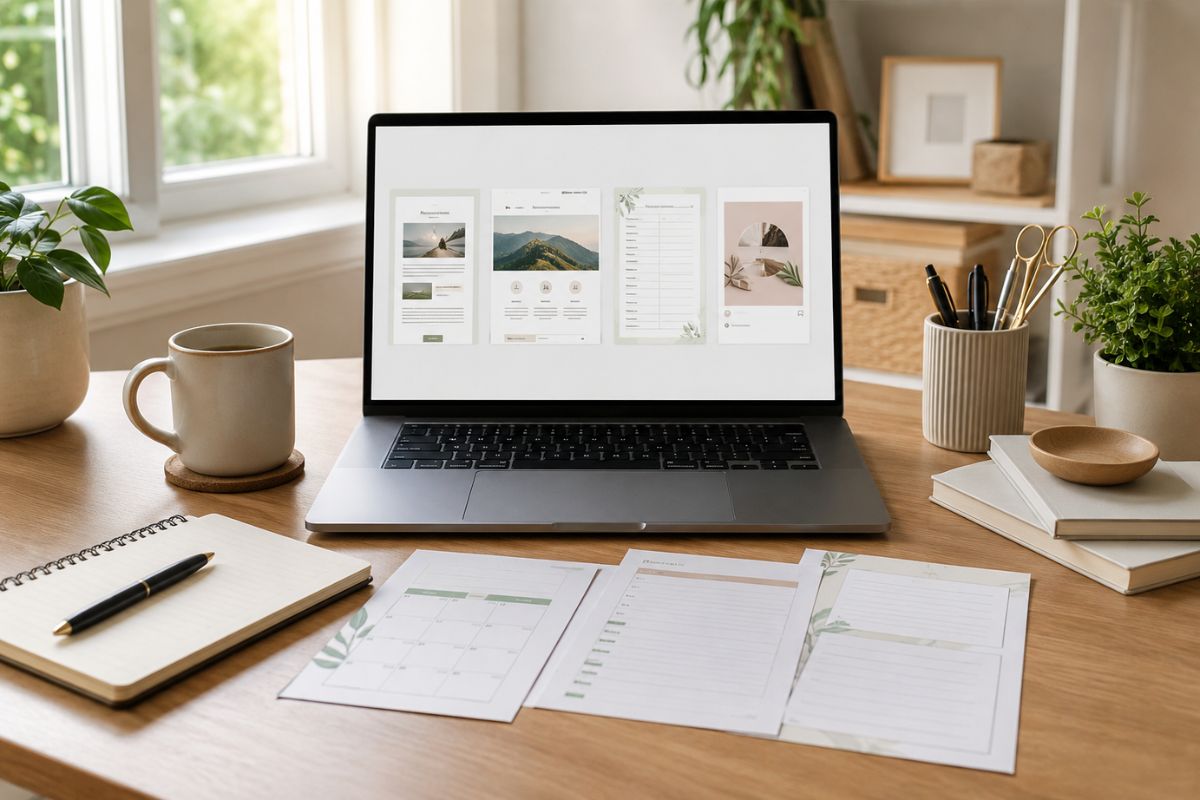
- Printables and planners for personal and professional use
If you’re not sure where to start, think about the problems you’ve already solved in your own life or career. That’s your starting point.

Where Can You Sell Your Templates?
Once you’ve created something, you need a place to sell it. A template marketplace is the easiest entry point. Sites like Etsy, Creative Market, and Design Bundles already have buyers searching for digital products like yours.
The beauty of a marketplace is that you don’t have to build an audience from scratch. The traffic is already there. You set up your shop, upload your files, and the platform handles the delivery when someone buys.
As you grow, you might want to sell directly from your own website. That gives you more control and higher profit margins. But starting with a marketplace is a smart, low-risk move, especially while you’re still learning what sells.
Does Your Template Have to Look “Professional”?
This is where people get in their heads, and I get it. The phrase graphic design can feel intimidating if you’ve never studied it formally. But here’s what matters more than a design degree: visual appeal, ease of use, a clear sense of purpose, and an intuitive layout.
Your template doesn’t need to win an award. It needs to be easy to read, easy to customize, and polished enough that someone feels confident using it. That comes down to solid template design principles: clean layout, consistent fonts, good color choices, and a logical structure.
Good user experience matters a lot here too. If someone downloads your template and can’t figure out how to edit it, they won’t come back.
Think about the end user at every stage of your product design process. What might confuse them? A short “how to use this” note inside the file can make a big difference or even better, a video walking them through how to use it.

What Makes Your Templates Stand Out?
Branding. When your templates have a consistent look, a recognizable color palette, a clear style, and a personality buyers can identify, people start to associate that with you. Over time, that builds trust, and trust is what drives repeat purchases.
Think carefully about template customization too. Buyers love templates they can easily adapt to their own look without needing a design background. The more intuitive the editing process, the more five-star reviews you’ll earn.
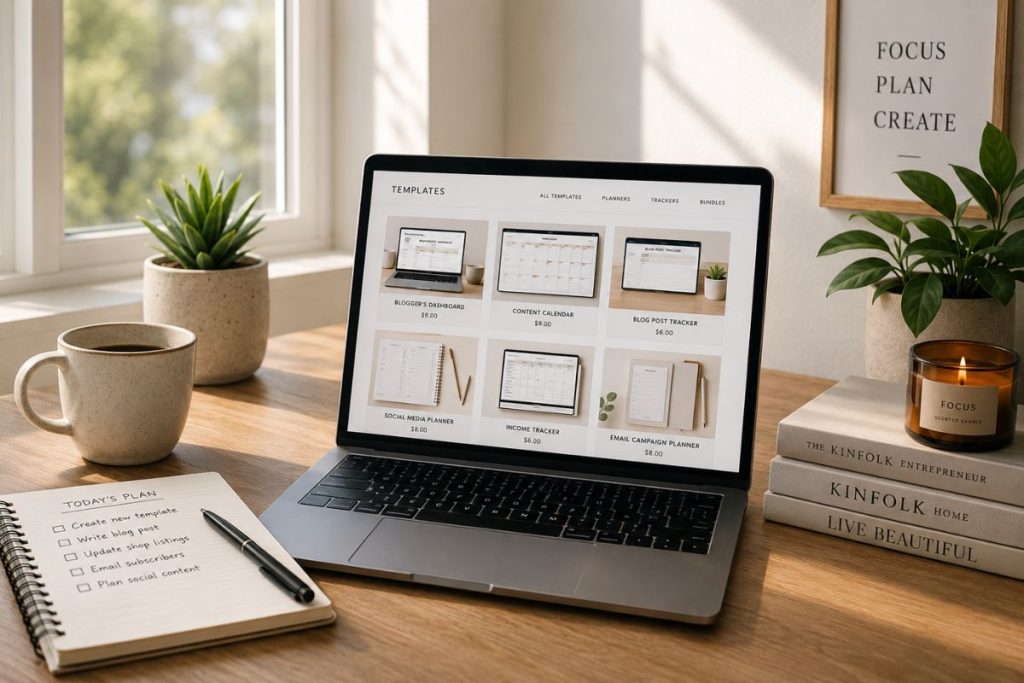
Your listing photos matter more than most new sellers expect. The visual appeal of your thumbnail can be the difference between a click and a scroll-past. Treat your shop images with the same care you give the template itself.
How Should You Price Your Templates?
Pricing strategies trip up a lot of new sellers. Many people underprice their work out of fear, and that’s a real missed opportunity.
Start by looking at what similar templates sell for on your chosen marketplace. Then think about value-based pricing: what is this template worth to the buyer? If it saves a small business owner four or five hours of work, pricing it at $15 is a steal for them and a fair deal for you.
Bundle pricing works really well too. A set of five or six email templates priced together at $25 often converts better than a single template at $8. Buyers feel like they’re getting more for their money, and you earn more per transaction.
How Do You Get People to Find and Buy Your Templates?
You can have the most beautiful template in the world and still make zero sales if no one knows it exists. That’s where marketing strategies come in.
Content creation is your best long-term tool. Write blog posts that teach people how to use templates. Pin your products on Pinterest. Share tips on social media. This kind of content feeds your sales funnel over time, bringing in buyers even when you’re not actively working.
For more immediate results, focus on your product listings. Your title, description, thumbnail image, and tags are your landing pages inside the marketplace. Strong visuals and clear descriptions drive sales conversion. Every listing is a mini pitch, so write it like one.
Building an email list early is worth the effort. A simple newsletter keeps your audience engaged and your shop top of mind. Customer engagement through email has one of the highest returns of any marketing channel, and it’s something you control completely.
How Do You Grow Your Template Shop Into a Real Business?
Online business growth happens in layers. You start with one or two templates, get some sales, pay attention to what buyers say in reviews and messages, improve your products, and make more.
The sellers who build something sustainable are the ones who stay curious. Read your reviews. Notice which templates sell and which ones don’t move. Use that information to shape your next product.
Over time, you might want to drive traffic from social media or Pinterest directly to your own website, where you keep a bigger share of every sale. That’s how a side hustle becomes a real income stream.
Ready to Start Creating Templates That Sell Today?
Creating templates that sell isn’t about being the most talented designer online. It’s about solving a real problem, packaging your solution clearly, and making it easy for someone else to use.
You don’t need everything figured out before you start. Pick one type of template, one audience, and one platform. Make something useful. Put it out there. Learn as you go. That’s how this works, and people with far less experience than you have built real income streams doing exactly this.
If you’ve got skills, a willingness to learn, a genuine desire to help others, and patience to stick with it, you’ve got what it takes to make creating templates that sell into something you’re proud of.
Frequently Asked Questions
Do I need expensive software to start creating templates?
Not at all. Many top sellers use tools like Canva, Google Slides, or Microsoft Word. What matters most is that your template design is clear, visually consistent, useful, and easy for buyers to customize.
How long does it take to make my first sale?
Most sellers on a template marketplace see their first sale within a few weeks, especially with strong listing descriptions and eye-catching thumbnail images. Consistent content creation and good keywords help speed things up.
Can I sell the same template on multiple platforms?
In most cases, yes. You can list your digital products on several platforms at once as long as you haven’t agreed to exclusivity with any of them. Always read each platform’s terms before listing.
How many templates do I need before I open a shop?
You can open a shop with as few as five solid listings. A smaller collection of high-quality templates will outperform a large shop full of rushed files every single time.
What’s the fastest way to improve my sales conversion rate?
Start with your listing photos and titles. Buyers make fast decisions based on visuals. After that, look at your descriptions and make sure you’re clearly explaining what the buyer gets, what format it’s in, how easy it is to edit, and what software they need.